
Family-Friendly Events in Iiyama | Enjoy Nanohana Festival, Kamakura no Sato, and Traditional Reitaisai on a Weekend Trip
Looking for a weekend getaway with your children? Somewhere not too far, not overly crowded, and interesting enough to keep little ones engaged? Iiyama City checks all those boxes.
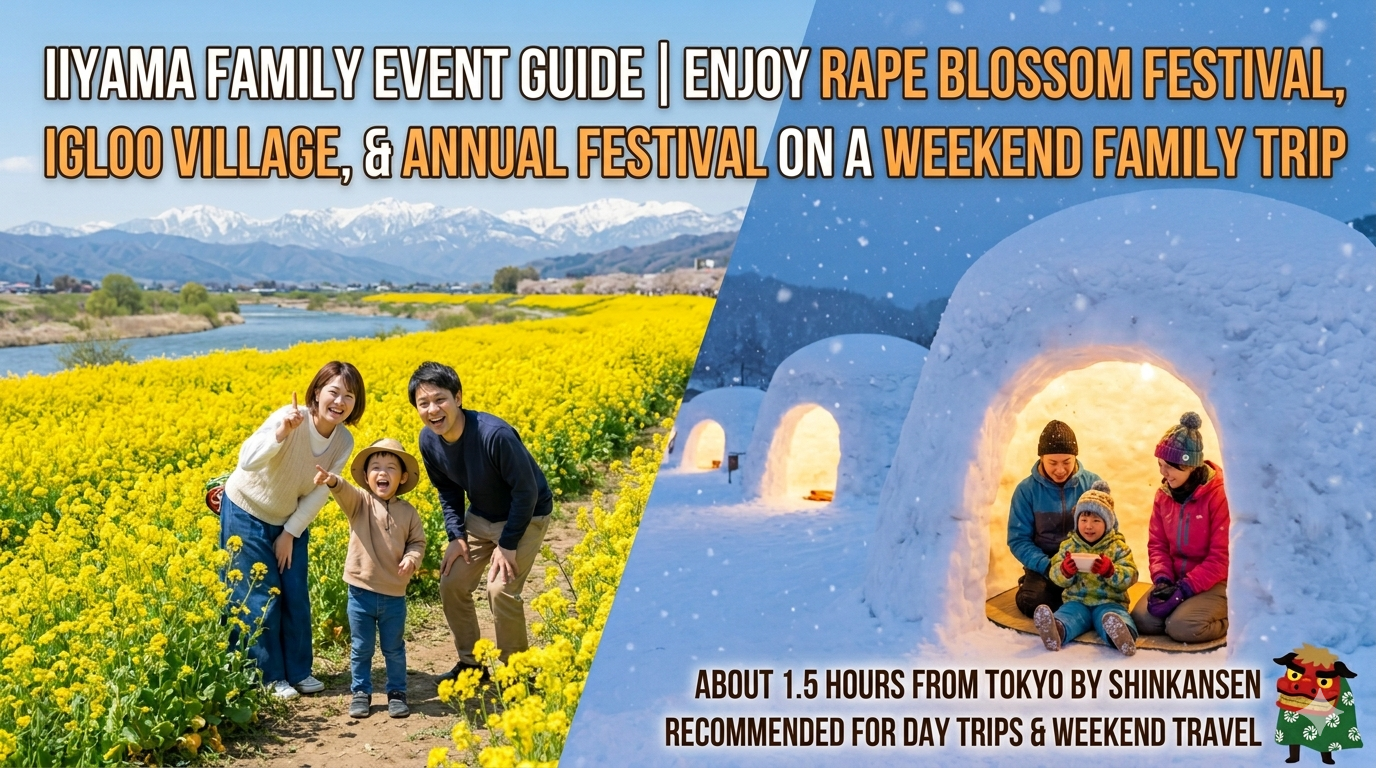
With a Hokuriku Shinkansen stop, it is easy to reach directly from the Tokyo area without transfers. Throughout the year, families can enjoy memorable seasonal experiences here, from spring fields of nanohana blossoms and winter snow play to traditional local festivals rooted in community life. In this guide, we introduce three especially popular choices for families visiting Iiyama: the Nanohana Festival, Kamakura no Sato, and local reitaisai festivals, along with practical tips to help you make the most of your weekend.
Recommended for:
- Families in the Tokyo area looking for a day trip or weekend outing by Shinkansen
- Families in Nagano and nearby prefectures planning a weekend drive
- Anyone seeking easy, child-friendly nature experiences for young children
Getting to Iiyama | Access by Shinkansen or Car
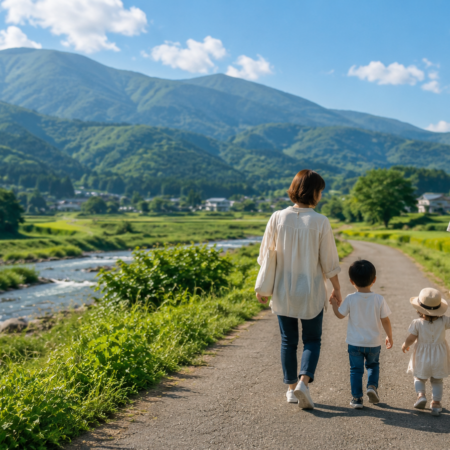
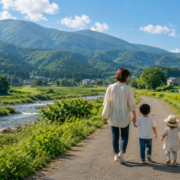
Iiyama has that just-right balance: less crowded than a major theme park, but still full of worthwhile places to visit. Surrounded by plains along the Chikuma River and quiet satoyama landscapes, it offers children the kind of scenery they do not often get to experience in daily life.
Direct access by Hokuriku Shinkansen in about 1.5 hours
Take the Hokuriku Shinkansen Hakutaka service and you can travel from Tokyo Station to Iiyama Station in about 1 hour 20 to 30 minutes, depending on the train and time of day. Please check the latest timetable on the official JR East website. Because there is no need to transfer, the journey is much easier for families traveling with small children.
The Iiyama tourism association also provides information on rental bicycles, though availability should be confirmed in advance. Sightseeing taxis are another convenient option.
Access by car and basic parking information
If you are driving from within Nagano Prefecture or from a neighboring area, the nearest expressway interchange is Toyota-Iiyama IC on the Joshinetsu Expressway. Many sightseeing spots in and around Iiyama have free parking, but spring weekends and peak seasons can get busy. It is best to check parking details in advance on the official website for each event or facility, or on the event pages on Iiyama Now.
If You Visit in Spring, the Nanohana Festival Is a Must
One of the reasons Iiyama is so widely known is its beautiful nanohana scenery. On a clear day, the bright yellow flower fields against the backdrop of the still-snowy Northern Alps create a view that makes people stop in their tracks.
The scale of the flower fields and best viewing season
The nanohana fields stretching along the Chikuma River are often described as among the largest in Nagano Prefecture. The flowers usually reach their peak from late April to early May, although timing varies from year to year. During the festival period, a variety of related events may also be held.
Exact dates and program details change each year, so please check the latest information on the Iiyama Now event calendar or the official Iiyama tourism website before your visit.
Tips for visiting with small children
The wide-open flower fields give children plenty of space to move around and enjoy the outdoors. A photo of your child standing among flowers shorter than their height can become a treasured family memory. Some areas are relatively flat and can be explored with a stroller, though conditions vary depending on the venue.
There are often local food stalls nearby, which makes it easier to spend time here with hungry children. Because it is an outdoor event, hats and sunscreen are helpful on sunny days. Nursing and diaper-changing facilities vary by venue, so it is a good idea to check information boards on the day or confirm details through local tourism information in advance.
Crowds, parking, and what to bring
The period around Golden Week tends to be especially busy. Parking lots may fill up early, so arriving in the morning is one of the best ways to enjoy a more relaxed visit.
Suggested packing list:
- A picnic sheet or ground mat for breaks and lunch
- An extra warm layer, as mornings and evenings in April can still be chilly in Iiyama
- A change of clothes in case children sit on dirt or grass
- Hat and sunscreen
- Water and light snacks
In Winter, Head to Kamakura no Sato for Snow Fun
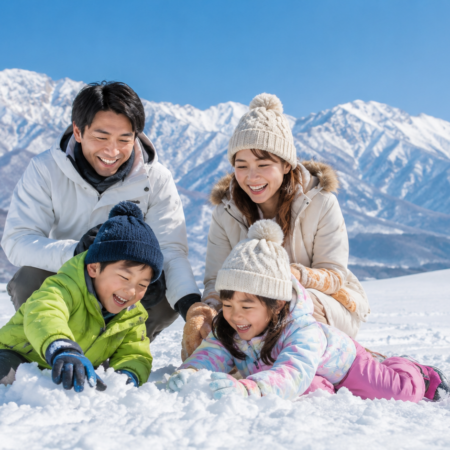
Iiyama is known as a snowy region, and in winter it offers the kind of deep-snow experience that is difficult to find in cities. One of the most iconic places to enjoy that is Kamakura no Sato.
What kind of place is Kamakura no Sato?
Kamakura no Sato is loved as a place where visitors can experience the winter lifestyle and snow culture of Iiyama. Stepping inside a full-sized snow hut and enjoying warm treats such as zenzai in a snowy setting feels wonderfully out of the ordinary, especially for children.
Families focused mainly on snow play often spend around one to two hours here. Admission fees and reservation requirements may vary by season, so please check the official information before visiting. The latest opening dates and business hours are also posted on Iiyama Now.
What ages can enjoy it? Ideas by age group
From first steps to around age 2: Many toddlers are delighted simply by feeling snow for the first time or riding in a sled. Because small children lose heat quickly, careful winter protection is especially important. It is best to keep outdoor time short and plan breaks somewhere warm.
Ages 3 to 6 (preschoolers): At this stage, children can fully enjoy walking on snow, throwing snow, and going inside a kamakura. They often become absorbed in snow play, so parents may want to help manage timing and energy before tiredness or frustration sets in.
Elementary school age and older: Older children often become curious about how kamakura are made and how deep the snow really is. Sledding, snowball fights, and building snowmen become more active and imaginative, and parents can join in more easily too.
Winter clothing and snowy-road preparation
Winter in a snow country like Iiyama feels different from winter in the city. Waterproof gloves and boots or snow boots are essential. Cotton items such as jeans can quickly become cold and uncomfortable once wet, so thermal or fleece inner layers paired with waterproof outerwear are a better choice.
If you are coming by car, winter tires are strongly recommended, and carrying chains is also a wise precaution. Road conditions around Iiyama can change quickly depending on snowfall, so be sure to check Nagano road information before departure.
Experience Local Tradition at a Reitaisai Festival
Iiyama is home to several shrines, each with its own annual reitaisai festival. These are not flashy tourist spectacles, but community-rooted celebrations where local life and history are still very much alive. For children, they can be a special chance to glimpse how the town’s people come together in everyday tradition.
About reitaisai festivals in Iiyama
Annual shrine festivals take place in different districts across Iiyama, and the timing and scale vary from one shrine to another. Specific dates, locations, and program details may also change depending on the year. To find out which shrines are holding festivals during your stay, check the Iiyama Now event calendar or a local sightseeing map.
The atmosphere of these festivals, prepared by local residents and often involving children from the area, has a warmth that is quite different from a staged sightseeing event. Depending on the district, you may see mikoshi processions, lion dances, and other traditional performances.
Highlights children may enjoy
The energetic chants of mikoshi bearers and the sound of festival drums naturally draw children in. If the festival is large enough to include food stalls, classic treats like cotton candy and candied apples add another layer of fun. The easy, friendly interaction with local people can also become one of the most memorable parts of the trip.
Some festivals may also offer workshops or hands-on activity corners. For details, please check the individual event pages on Iiyama Now.
Seasonal One-Day Family Model Courses and Practical Tips
Spring one-day model course (centered on the Nanohana Festival)
| Time | Plan |
|---|---|
| 10:00 | Arrive at Iiyama Station by Shinkansen, or park in the city |
| 10:30 | Head to the Nanohana Festival venue. Mornings are usually less crowded |
| 12:00 | Lunch near the venue or in town. There are local soba and set-meal restaurants around the city |
| 13:30 | Walk along the Chikuma River, or take a relaxed stroll through central Iiyama and Butsudan Street, where traditional Buddhist altar workshops line the street and offer children a glimpse of local craftsmanship |
| 15:00 | Stop by a hot spring bath. There are day-use onsen facilities in and around the city |
| 17:00 | Head home |
It is a good idea to leave some flexibility after lunch in case your children want to keep playing or need a slower pace.
Winter one-day model course (centered on Kamakura no Sato)
| Time | Plan |
|---|---|
| 9:30 | Arrive at Iiyama Station or your parking spot. An early start is recommended |
| 10:00 | Visit Kamakura no Sato. Snow play takes energy, so the morning is often the best time |
| 12:00 | Lunch. Warm soups and other hot dishes are especially popular with families in winter |
| 13:30 | Relax at a local hot spring or roadside station |
| 15:00 onward | Head back early, as winter temperatures drop quickly after sunset and road conditions can change |
In winter especially, it is wise to build in extra time for the return journey.
Rainy-day options and how to find good places to eat
- Rainy-day alternatives: Iiyama has museums and facilities introducing local culture and history. The most reliable option is to ask at the local tourism desk or information center on the day
- Where to eat: Restaurants are scattered around the station area and along the main roads. Searching “Iiyama lunch” on Google Maps in advance can help narrow down your options
- Nursing and diaper-changing spaces: Facilities are often available at roadside stations and larger buildings along the highways. At event venues, please check the information boards on site
- Iiyama Station tourist information center: A very helpful stop for brochures, maps, and advice from local staff. It is especially recommended for first-time visitors
Frequently Asked Questions (FAQ)
Q1. When is the Nanohana Festival held, and can young children enjoy it?
It is often held from late April to early May, but both bloom timing and festival dates may vary from year to year. Please check the Iiyama Now event calendar for the latest updates. For small children, simply walking through a vast landscape of yellow flowers can already be a memorable experience. Some areas are relatively flat and accessible with a stroller, although conditions depend on the venue.
Q2. What age is Kamakura no Sato suitable for?
Many children can begin enjoying the snow, entering kamakura, and simple snow play from around age two or three. However, parents should pay close attention to slipping, falling, and staying warm enough. For younger children especially, shorter outdoor stays with regular warm-up breaks are the safest and most comfortable approach. Older children can enjoy snow play more actively and independently.
Q3. When and where are reitaisai festivals held?
Because reitaisai are held at different shrines throughout Iiyama, the date and location vary depending on the shrine. Information about specific festivals may appear on the Iiyama Now event calendar. Before your visit, check the calendar to see whether any local festivals are taking place during your stay.
Q4. Is a day trip from Tokyo realistic with children?
Yes. The Hokuriku Shinkansen Hakutaka connects Tokyo and Iiyama in around 1 hour 20 to 30 minutes, depending on the train and time of day. Because the trip is direct, it is relatively manageable even with small children. That said, when traveling at a child’s pace, the day can fill up quickly with transportation and sightseeing alone. In most cases, it is better to plan for one or two main stops and enjoy them at a relaxed pace.
Q5. What is the best season to visit Iiyama?
Each season has its own appeal. Spring, especially April to May, is known for the Nanohana Festival and its vibrant flower scenery, while winter, especially January to February, offers memorable kamakura and snow experiences. For families visiting Iiyama for the first time, spring and winter are especially recommended because they are visually striking and easy to remember in photos. For the latest event information, please check the Iiyama Now event calendar.
Event dates, admission fees, and access information mentioned in this article are subject to change. Please check the Iiyama Now event calendar or each facility’s official website for the latest information before your visit.