
Raising Children in Iiyama, Nagano: A Family Guide to Childcare, Schools, and Rural Life in Japan
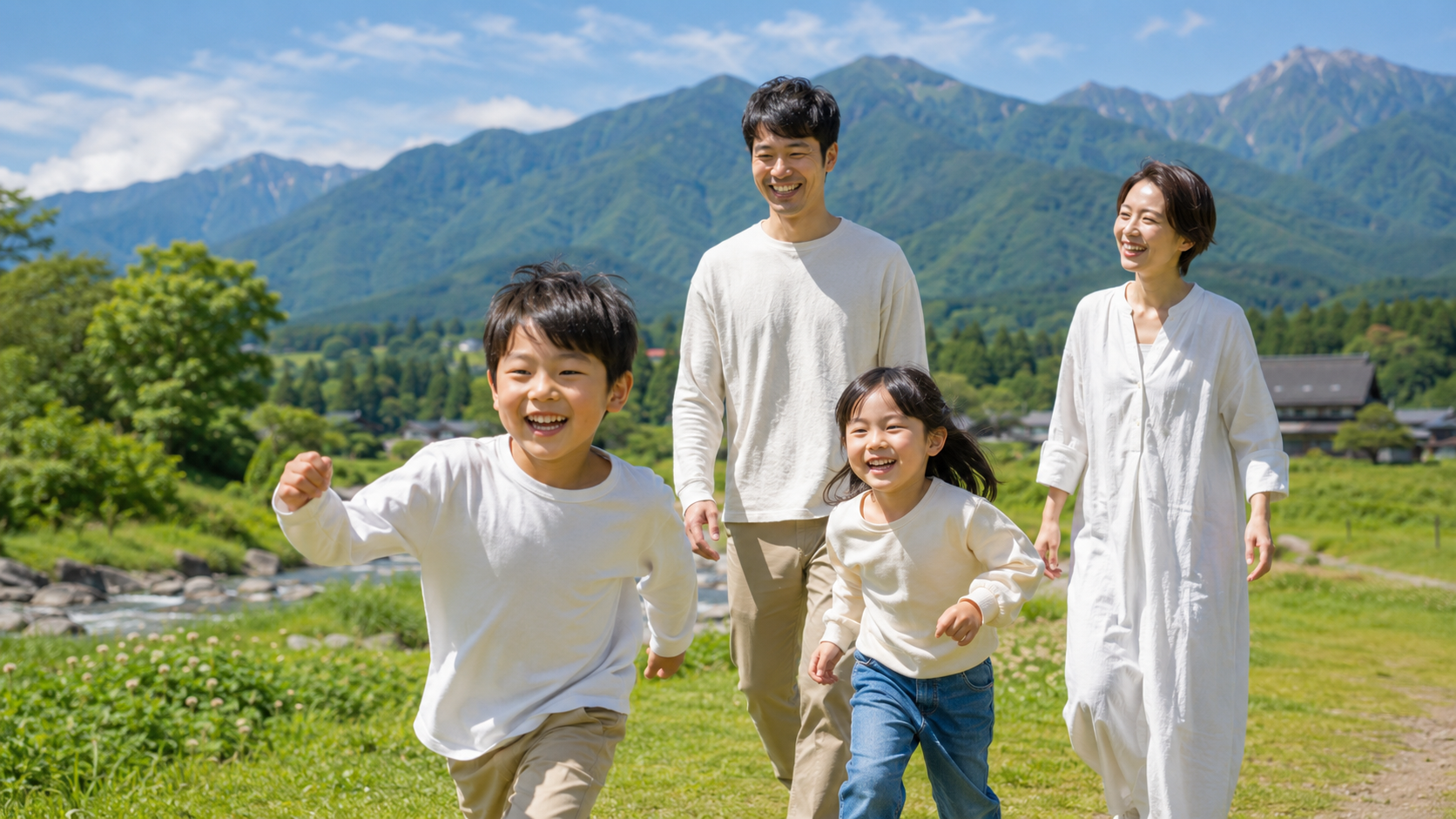
For families who feel tired of the speed, pressure, and competition of city life, moving to Iiyama City in Nagano Prefecture can be an appealing option. Parents in their 30s, especially those raising young children, often begin to wonder whether a quieter place surrounded by nature might offer a healthier and more balanced lifestyle.
But before making such a big decision, many families have practical questions. Can children enter nursery school smoothly? Are class sizes too small? What is school life like in a rural part of Japan? Are there after-school care options for working parents? What about high school, extracurricular activities, and local community life?
This article introduces the childcare and education environment in Iiyama, Nagano, for families considering relocation from Tokyo or other urban areas. It covers nursery schools, elementary and junior high schools, after-school care, local activities, community support, and the realities of raising children in a snowy rural region of Japan.
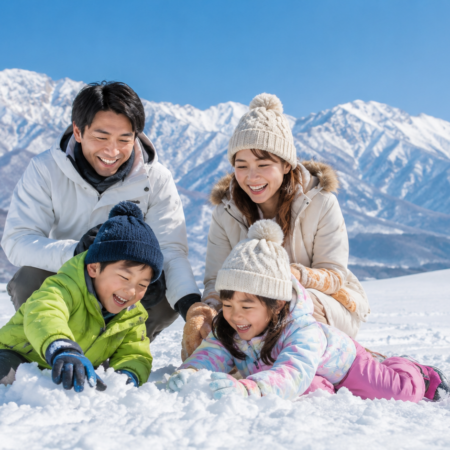
Iiyama is known for its rich natural environment, deep winter snow, farming culture, and close-knit local community. For children, this can mean more than simply living in a quieter place. It can mean growing up with rivers, mountains, fields, snow, seasonal festivals, and adults in the community who know them by name.
At the same time, rural life is not the same as city life. There are fewer choices in some areas, and families need to understand both the advantages and the limitations before moving. This guide will help you imagine what raising children in Iiyama could really look like.
Why Families Consider Moving to Iiyama
Many families begin thinking about rural relocation after years of busy urban life. Long commutes, crowded trains, limited family time, expensive housing, and highly competitive school environments can gradually create stress for both parents and children.
For parents who want their children to grow up more freely, Iiyama offers a very different rhythm. Children can spend more time outdoors, experience the seasons directly, and become part of a community where school, family, and local life are closely connected.
For families considering moving to Iiyama, the biggest appeal is often this combination:
- A quieter lifestyle
- More access to nature
- A smaller educational environment
- Stronger community connections
- More space for children to grow
- Childcare support for working parents
Iiyama is not a large city. Its population is around 19,000, and life is more compact and local. But for families seeking a more personal, nature-based style of child-rearing in Japan, that smaller scale can be a major advantage.
Overview of Childcare and Family Support in Iiyama
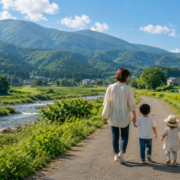
Iiyama City is located in northern Nagano Prefecture, in an area known for mountains, farmland, the Chikuma River, and heavy snowfall in winter. It is a rural city, but it also has public services and childcare facilities that make family life more practical than many people might expect.
For families with young children, one of the most important points is access to nursery schools. Iiyama has multiple nursery schools, including public and private options, and compared with major urban areas, the waiting list situation is generally much less severe. This can be a major relief for parents who have experienced difficult nursery school applications in large cities.
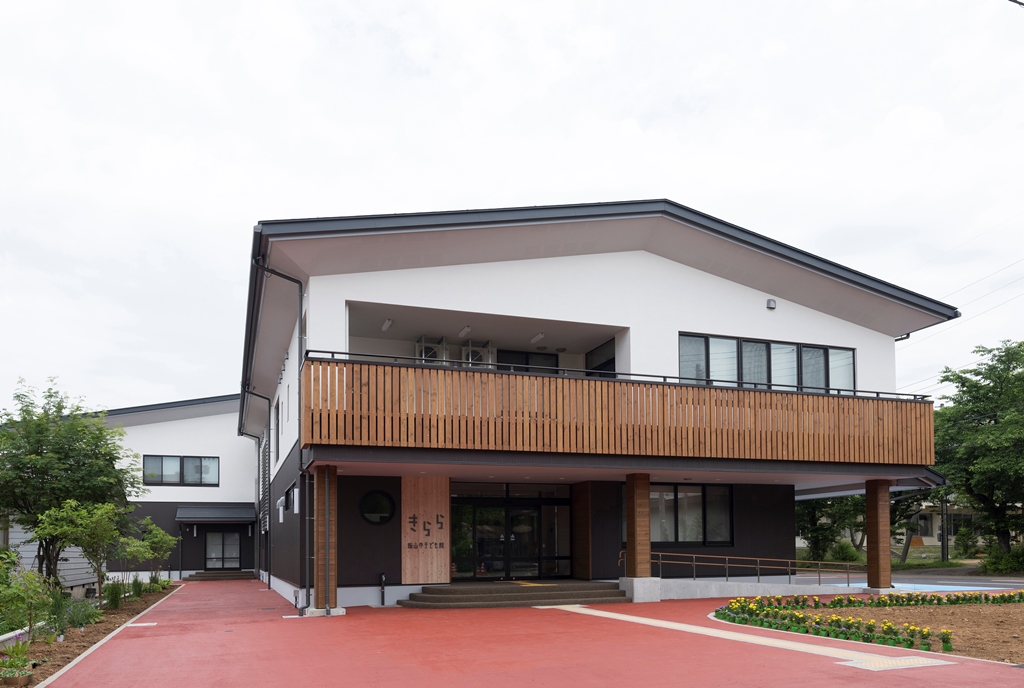
The city also has the Iiyama Children’s Center Kirara, a childcare support facility that includes after-school care, a child-rearing support center, and services for families who need advice or temporary support. For working parents, this kind of centralized support can make the transition to rural life much easier.
In addition, Iiyama offers financial and practical support for families, including childcare-related programs and systems that help reduce the burden on parents. Families should always check the latest details with the city office before moving, but the overall environment is supportive for those raising children.
Nursery Schools and Early Childhood Care
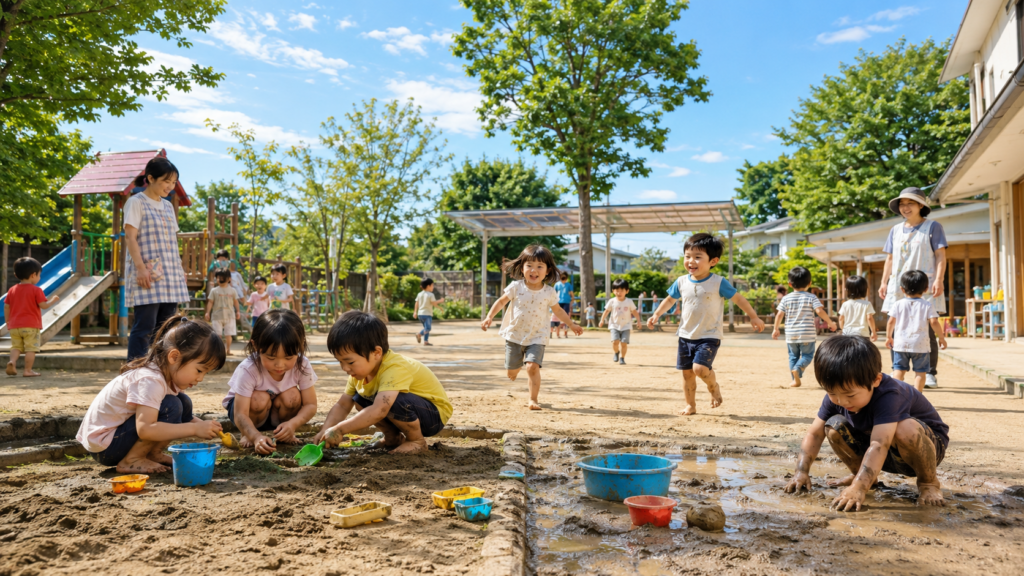
For parents of babies, toddlers, and preschool-age children, nursery school access is one of the first concerns when planning a move. In large cities, it is common for parents to worry about long waiting lists, difficult application procedures, and whether they can return to work after parental leave.
In Iiyama, the situation is generally more manageable. The city has several nursery schools, and because the population is smaller than in major urban centers, families often find it easier to secure a place. However, availability depends on the child’s age, the timing of application, and the capacity of each facility. In some cases, families may need to consider their second-choice nursery school.
One of the strengths of childcare in Iiyama is the close relationship between teachers, children, and parents. In a smaller community, nursery school staff often know each child’s personality and family situation well. Parents may find it easier to ask questions during drop-off and pick-up, and communication can feel more personal than in a large urban facility.
The natural environment is another advantage. Many children in Iiyama grow up playing outside, walking near fields, seeing seasonal changes, and experiencing snow in winter. Early childhood education is not limited to the classroom. Nature becomes part of everyday learning.
For families who want their children to spend more time outdoors and less time in crowded indoor spaces, Iiyama’s nursery school environment can be very attractive.
After-School Care for Working Parents
For dual-income families, after-school care is essential. Parents need to know that their children have a safe place to go after classes end, especially in the lower grades of elementary school.
In Iiyama, the after-school children’s club at the Iiyama Children’s Center Kirara provides care for elementary school students whose parents are not at home during the day because of work or other reasons. Children can spend time there after school, do homework, play, and relax in a supervised environment.
The facility is especially helpful for families moving from cities, because it gives parents confidence that they can continue working while their children are supported locally. During school holidays and on Saturdays, care may also be available for longer hours, which is important for households where both parents work.
The center also includes other support functions, such as a child-rearing support center and care services for children recovering from illness. This makes it easier for families to access information, meet other parents, and ask for help when needed.
For families considering Iiyama relocation, this kind of after-school support can be one of the key factors that makes rural living realistic.
Elementary and Junior High School Life in Iiyama
School life in Iiyama is different from school life in a large city. Class sizes tend to be smaller, and schools are more closely connected to the surrounding community. For some parents, this is a major advantage. For others, it may raise questions.
One common concern is whether smaller classes give children enough social opportunities. Parents may wonder whether their children will have enough friends, enough competition, and enough academic stimulation.
In practice, smaller schools can offer important benefits. Teachers are more likely to notice each child’s strengths, difficulties, and emotional changes. Children may have more chances to speak in class, take responsibility, and participate actively in school events. Instead of being one student among many, each child can become more visible.
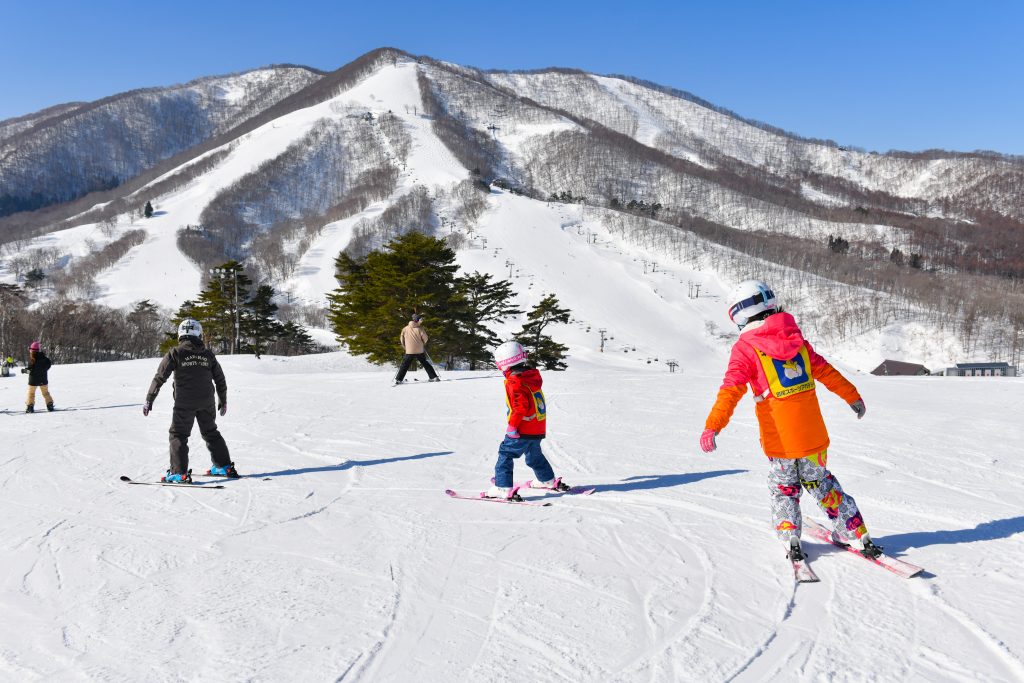
In Iiyama, school education also reflects the local environment. Children may experience ski lessons in winter, agricultural activities, local festivals, and learning connected to the seasons. These experiences help children understand the place where they live and develop practical knowledge beyond textbooks.
Recent school consolidation has also shaped the educational environment in Iiyama. The city now has a more compact school structure, with elementary and junior high schools serving the local area. While the scale is smaller than in urban school districts, the close attention from teachers and strong school-community connection can be a significant strength.
The Benefits of Small Class Sizes
Small class sizes are one of the most distinctive features of education in rural Japan. For families moving from Tokyo, Osaka, or other major cities, this can feel very different.
The benefits include:
- More individual attention from teachers
- Easier communication between school and parents
- More chances for children to take active roles
- Stronger relationships among classmates
- A school environment where adults know each child well
Children who are shy or easily overlooked in large classrooms may benefit from this setting. They may have more chances to speak, perform, lead activities, or receive support when they struggle.
There are also possible concerns. A smaller class means fewer same-age peers, and some children may need time to adjust if the social group is limited. Academic competition may also feel different from urban schools.
However, many families find that the depth of relationships and the sense of belonging can outweigh these concerns. In school events such as sports days, performances, and local activities, every child has a role. This can help children build confidence and feel valued.
Support for Children Who Transfer to Iiyama
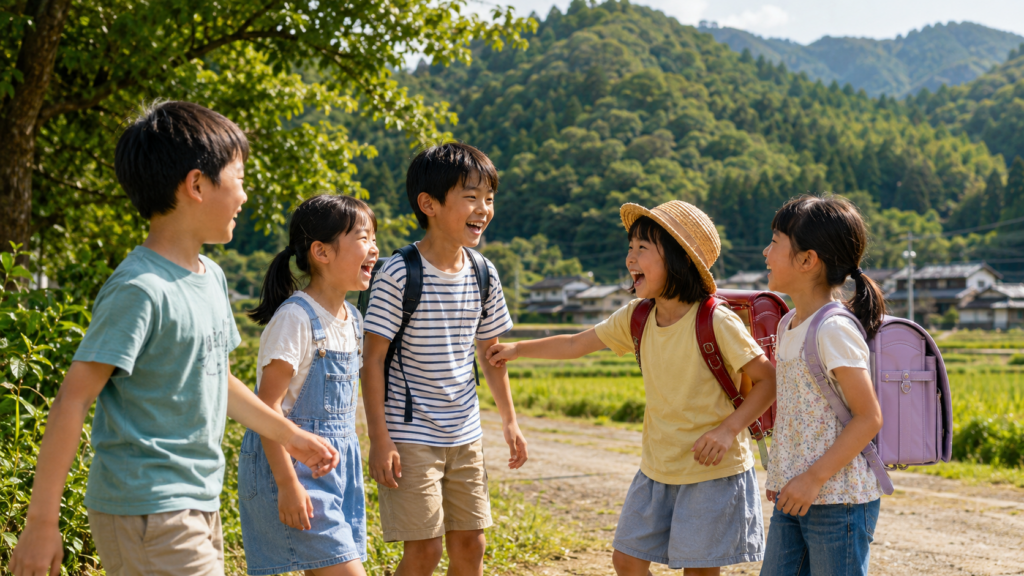
Moving to a new school is a major life change for children. Parents often worry about whether their children will make friends, adjust to a different environment, and feel accepted as newcomers.
In Iiyama, the smaller scale of the community can make the transition easier. Teachers, classmates, and local parents often become familiar with new families quickly. Children may be included through school events, neighborhood activities, festivals, and sports clubs.
For families moving from large cities, the friendliness of the community can be surprising. People may greet children on the street, remember their names, and help parents understand local customs.
That said, adjustment still takes time. Children may feel nervous at first, and parents may need to actively communicate with schools, teachers, and other families. Joining local events, saying hello to neighbors, and asking questions can help families become part of the community more smoothly.
For foreign families or international residents, it is especially important to visit schools in advance, ask about language support, and understand how communication with teachers will work. But for families who value a personal and community-based environment, Iiyama can offer strong support.
Nature-Based Learning and Local Culture
One of the biggest advantages of raising children in Iiyama is the connection between education and nature. Children are not only learning inside classrooms. They are also learning through snow, rivers, farms, forests, local food, and community traditions.
In winter, skiing and snow activities become part of life. Children learn how to move in deep snow, enjoy winter sports, and understand the challenges of living in a heavy snow area.
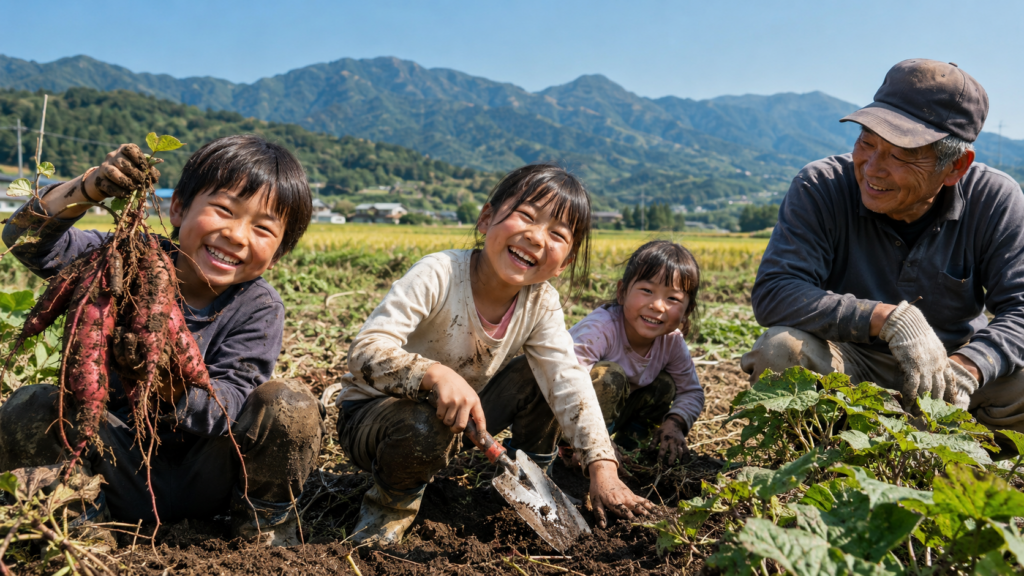
In warmer seasons, they may experience farming, gardening, insects, riverside play, mountain walks, and local festivals. These activities build physical confidence, curiosity, and resilience.
Local culture is also part of children’s learning. Festivals, traditional music, community events, and seasonal customs allow children to interact with people of different generations. Older residents may teach children about farming, local history, or traditional ways of living.
For parents who want their children to develop a strong connection to real-world experiences, Iiyama offers an educational environment that is difficult to recreate in a city.
Extracurricular Activities and Sports
Families moving to Iiyama may wonder whether there are enough extracurricular options. Compared with large cities, the number of private lessons, cram schools, and specialized programs may be limited. However, Iiyama offers many activities that make use of the local environment.
Popular options may include:
- Skiing and snowboarding
- Baseball, soccer, basketball, and other local sports clubs
- Outdoor activities such as camping and hiking
- Agricultural experiences
- Local music, drums, or festival-related activities
- Community-based children’s programs
Winter sports are especially important in this region. Because snow is part of daily life, many children become comfortable with skiing and snow activities from a young age. For families who enjoy outdoor sports, this can be a major attraction.
The value of extracurricular life in Iiyama is not only in the number of choices. It is in the quality of experience. Children can move their bodies, build friendships, learn from local adults, and develop a strong connection to the seasons.
High School and Future Education Options
Families with children approaching junior high or high school age also need to think about future education. Iiyama has its own high school option, and families can also consider schools in nearby areas, including Nagano City, depending on the child’s goals and commuting possibilities.
For students who want a local high school experience, studying in Iiyama can offer a familiar and supportive environment. Smaller schools may provide closer relationships with teachers and more personal guidance.
For families considering university entrance exams or specialized academic paths, it may be necessary to think carefully about study support, cram schools, online learning, or commuting to larger cities for additional education. Compared with Tokyo or other urban areas, the number of private academic services is smaller.
However, this does not mean that children cannot pursue higher education from Iiyama. Families can combine local school support, online learning, and regional education options to create a realistic path.
The key is to plan ahead. Parents should look at their child’s personality, academic goals, transportation options, and available support before deciding where to live and how to prepare for the future.
Community Support and Local Relationships
Community is one of the most important parts of raising children in Iiyama. In a rural city, families are more likely to know their neighbors, teachers, local shop owners, and other parents.
This can be reassuring. Children may be watched over not only by parents and teachers, but also by people in the neighborhood. Local festivals, school events, volunteer activities, and children’s gatherings help families become connected.
For parents, this can also reduce isolation. Moving to a new place can be lonely, especially for families who do not have relatives nearby. But local child-rearing circles, school connections, and neighborhood relationships can help parents build a new support network.
Of course, close community life may feel unfamiliar to people who are used to urban privacy. There may be more local customs, more neighborhood expectations, and more opportunities to participate in events. Families who are open to greeting people, joining small activities, and asking for advice often adjust more easily.
For many families, this human connection becomes one of the most valuable parts of moving to Iiyama.
Common Concerns Before Moving to Iiyama
Families considering relocation often have similar concerns. These include:
- Will my child enter nursery school smoothly?
- Will a small class be good for my child?
- Will my child make friends after transferring?
- Are there enough after-school activities?
- What happens when my child reaches high school?
- Can both parents continue working?
- Will rural community life feel too close?
- How difficult is winter life in a heavy snow area?
These questions are important. Iiyama has many advantages, but it is not perfect for every family. There are fewer shops, fewer specialized services, limited public transport, and a strong need for a car in many cases. Winter also requires serious preparation.
However, many families find that the benefits are meaningful: more nature, more family time, lower pressure, closer school relationships, and a community that supports children as they grow.
The best way to understand whether Iiyama is right for your family is to visit, talk to local people, and imagine your daily life there.
Is Iiyama a Good Place to Raise Children?
Iiyama can be a very good place to raise children for families who value nature, community, and a slower pace of life.
It may be especially suitable for families who:
- Want children to grow up close to nature
- Prefer smaller schools and closer teacher relationships
- Need after-school care in a supportive environment
- Are interested in outdoor activities and seasonal learning
- Want stronger ties with the local community
- Can accept snow, car-based life, and fewer urban conveniences
- Are looking for a more balanced family lifestyle in Japan
It may be less suitable for families who require many private schools, frequent urban entertainment, extensive public transport, or a wide range of specialized lessons and services nearby.
In short, Iiyama is not simply a “cheaper countryside alternative” to city life. It is a different way of living and raising children.
Before You Move: Practical Steps for Families
If you are seriously considering moving to Iiyama with children, start with small steps.
Before making a final decision, consider doing the following:
- Visit Iiyama in different seasons, especially winter.
- Contact the city office and ask about childcare support.
- Visit nursery schools, elementary schools, or junior high schools if possible.
- Spend time at the Iiyama Children’s Center Kirara.
- Talk to local parents and families who have already moved.
- Check after-school care hours and application procedures.
- Research housing, commuting, and winter transportation.
- Consider your child’s future education path, including high school.
- Think honestly about your family’s relationship with community life.
- Try a short stay before making a permanent move.
A short visit may not show everything, but it can help you feel the atmosphere of the town. Seeing the schools, roads, neighborhoods, and natural surroundings in person will give you a much clearer picture than online research alone.
Final Thoughts: Raising a Family in Iiyama, Nagano
Raising children in Iiyama, Nagano means choosing a lifestyle where nature, education, and community are closely connected. Nursery school may be easier to access than in large cities. Smaller classes can give children more attention. After-school care helps working parents. Local activities, ski lessons, farming experiences, and festivals give children a rich, real-world education.
At the same time, families need to be realistic. Rural life brings fewer choices, heavier reliance on cars, serious winter conditions, and a closer community environment. These are not small details. They are part of everyday life in Iiyama.
But for families who want children to grow up with more space, more nature, and more human connection, Iiyama is worth considering.
If you are thinking about moving to rural Japan with children, visit Iiyama first. Walk through the town, see the schools, talk to local families, visit the childcare support center, and experience the seasons for yourself.
Your family’s next chapter may begin with one simple question:
Could Iiyama be the place where our children grow up?